

Is scar massage the same as scar therapy?

If you have been searching for scar massage Bristol, you may be wondering whether scar massage and scar therapy are the same thing. They overlap, but they are not necessarily identical.
Scar massage generally involves using touch and movement to work with the skin and tissues around a healed scar. It can be a useful part of caring for a scar and scar self-care at home, particularly when appropriate guidance has been given by a healthcare professional.
Scar therapy takes a broader, more individualised approach.
Rather than simply massaging the scar itself, I consider how the scar feels, how it moves and how you experience the surrounding area. This may include the skin around the scar, the abdominal wall, pelvis, breathing patterns and the way your body moves as a whole. This is particularly relevant following a C-section. Your body has not simply acquired a scar, it has adapted to pregnancy, surgery and the demands of caring for a new baby. You may have developed new movement patterns or areas of tension without even realising it.
During a scar therapy sessionI am interested in questions such as:
How does the area feel to you?
Is there numbness, sensitivity, tightness or pulling?
Does the skin move comfortably in different directions?
Has your relationship with your abdomen or scar changed?
Do you notice differences when breathing, stretching or moving?
Are there areas around the scar that feel particularly tense or restricted?
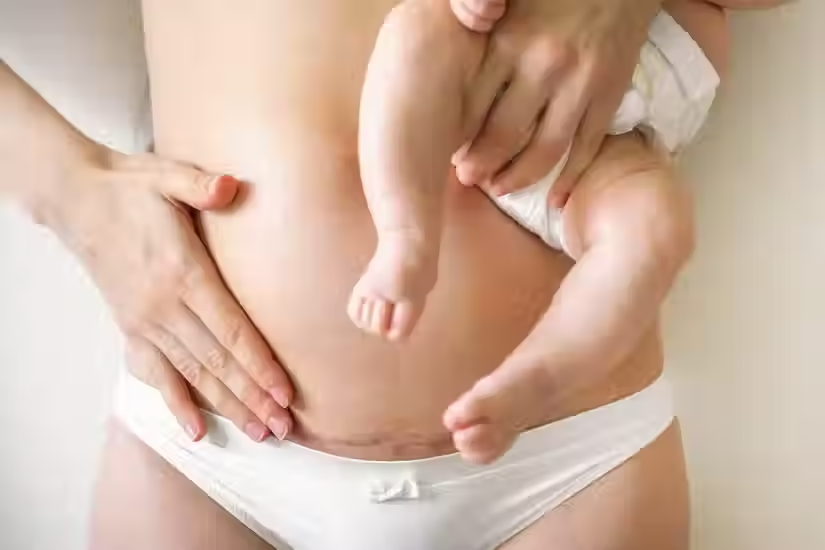
The treatment is adapted to your scar, your body and your stage of recovery. An older scar may require a different approach from a relatively recent one, and no two people will necessarily respond in the same way.
The intention isn't to force the tissue to change. It is to work gently with the body, encouraging awareness, comfortable movement and a greater sense of ease around the scar.
For some women, this can also be an important part of reconnecting with an area of the body that they may have avoided touching or thinking about since their C-section.
C-section scars and fascia
One reason I take a broader approach to C-section scar therapy is my interest in the relationship between fascia and scar tissue.
Fascia is a form of connective tissue that surrounds and connects structures throughout the body. It forms an extensive three-dimensional network, helping tissues to glide, transmit forces and coordinate movement.
When the body is injured or undergoes surgery, the normal organisation of the tissues in that area changes as part of the healing process. Scar tissue is different from the original tissue, and the way the skin and underlying tissues move may change as the scar matures.
With a C-section, the incision is made through several layers of tissue. As the area heals, changes in the local tissues can sometimes be experienced as tightness, altered sensation, reduced skin mobility or a feeling of pulling around the abdomen.
This is one reason I don't view a C-section scar as simply a line on the surface of the skin.
The scar is part of a living, moving body.
The surrounding tissues are involved in breathing, posture and movement, and the abdomen works in relationship with the pelvis, spine and diaphragm. Exploring how these areas feel and move can therefore form part of a more comprehensive approach to scar recovery.
Importantly, this does not mean that every postnatal symptom is caused by a scar, or that scar therapy can resolve every problem following a C-section. Persistent pelvic pain, abdominal pain, significant changes in sensation or movement, or other ongoing symptoms should be appropriately assessed by a GP, midwife, physiotherapist or other qualified healthcare professional.
My role is to complement appropriate healthcare by offering a gentle, body-focused approach to the scar and its surrounding tissues.
Your scar is only one part of the picture
For me, scar recovery is not simply about making a scar look different.
It is about helping you become more comfortable with the area, understand how it feels and explore how it relates to the rest of your body.
This can be particularly valuable during post-C-section recovery, when you are already adapting to enormous physical and emotional changes.
Your body has done something remarkable: it has grown a baby, experienced birth and healed from major surgery.
Scar therapy offers a space to slow down, pay attention and support that process, gently, respectfully and at your own pace.
When is scar therapy appropriate?
Scar therapy should only be performed once the incision is fully healed. The appropriate timing varies between individuals, so if you are uncertain, seek advice from your GP, midwife, surgeon or other appropriate healthcare professional.
Scar therapy is not appropriate over an open wound or an area showing signs of infection.
If you experience increasing pain, redness, heat, swelling, discharge, an unpleasant smell, fever or any other concerning symptoms, please seek medical advice.
Scar therapy complements medical care; it does not replace it.
Book a free consultation or an initial assessment. I practice from my private studio in Fishponds and at Alma Physiotherapy in Clifton.


Comments